
Strategic Assessment: Resource Management
The following are among the primary problem areas SDI has assessed in resource management:
Strategic Topics
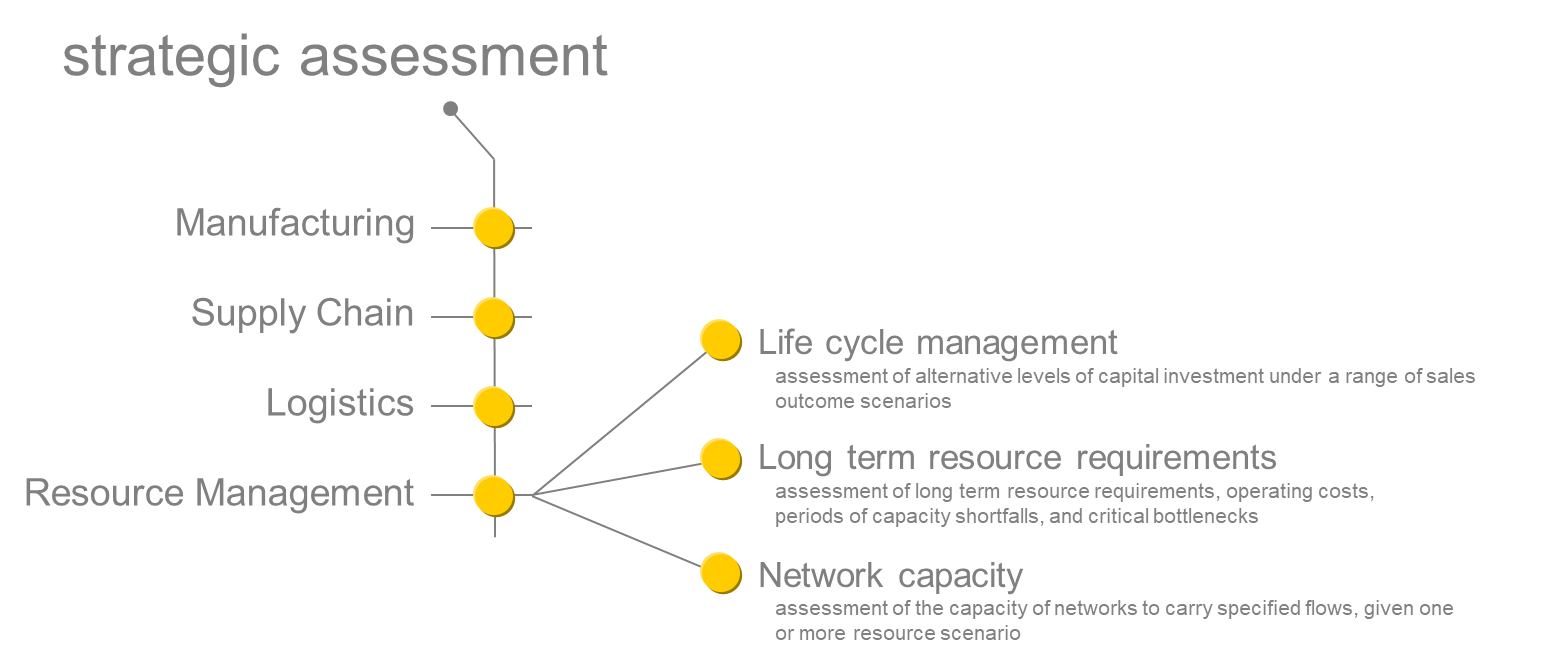
- Life cycle managementassessment of alternative levels of capital investment under a range of sales outcome scenarios
- Long term resource requirementsassessment of long term resource requirements, operating costs, periods of capacity shortfalls, and critical bottlenecks
- Network capacityassessment of the capacity of networks to carry specified flows, given one or more resource scenario
Resource Management: Life cycle management
Summary
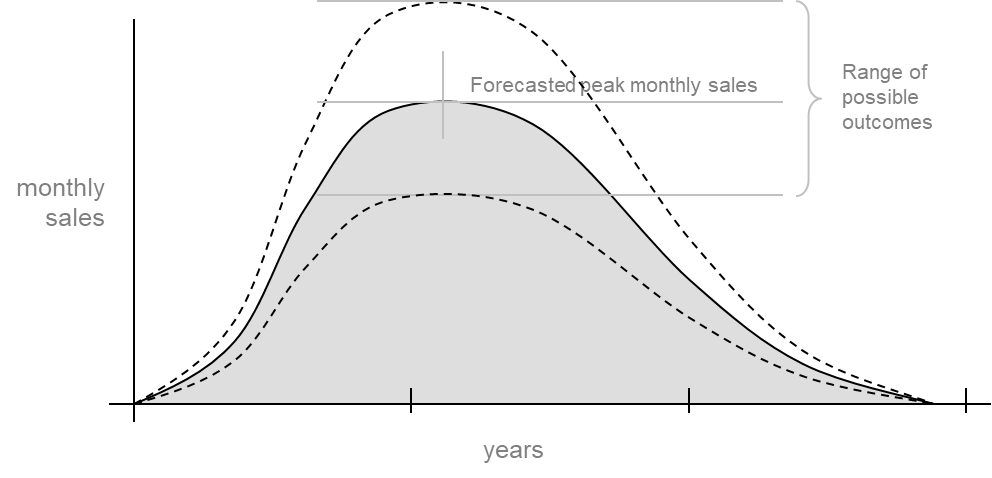
Some products have a relatively short life cycle. Although the duration of the product life might be relatively predictable, the total sales may vary widely from forecast. When production requires custom manufacturing elements, sizing production capacity can be a tricky proposition, particularly given the difficulty in predicting peak monthly sales. If production resources are undersized, substantial prebuilding of stock may be required and orders may be missed. If resources are oversized, profits on the product will be eroded. Simulation allows assessment of total cost outcomes for a matrix of combinations of resource sizing and sales outcomes.
Case Studies
-
Life Cycle Resource Management Model
The primary purpose of this model is to study the consequences of a mismatch between capacity and life cycle peak demand. The only strategy available to cope with periods of capacity under demand was pre-building.
Resource Management: Long Term Resource Requirements
Summary
SDI's simulation tools have proven effective in assessing long term resource requirements, operating costs, periods of capacity shortfalls, and critical bottlenecks. The four case studies referenced here cover a wide range of long term planning problems. In each case, one or more services demand scenario is provided to drive the simulation. Service performance is measured through out the model run, as well as resource utilization and total operating cost. The effect of increased or decreased critical resources on performance and costs is assessed.
Case Studies
- DOE Equipment Rehab Model This model is designed to assess resource requirements over a 25 year horizon with a wide range of varying supply and demand scenarios.
- TRU-Waste System Model This model was used to assess transport and storage resources required to meet Department of Energy goals for TRU-Waste disposal over a 35 year period.
- Dynamic Ground Segment Model Delta IV rockets are shipped to Cape Canaveral in parts and are assembled near the launch site. Boeing used this model to assess the tradeoff between the number of specialized fixtures required for assembly and the throughput of assembled rockets.
- KBR Services Model Simulation Dynamics developed a model to assess resource requirements for facility maintenance to assist KBR in developing proposals for long term facility maintenance contracts.
Resource Management: Network Capacity
Summary
The purpose of network models is to assess the capacity of networks to carry specified flows, given one or more resource scenario. Many different kinds of systems can be described as networks. Three project examples are given here:
- Communications network: flow of calls from a grid of origins to a set of POP's (points at which calls can be routed out of the network)
- Transportation Network: flow of vehicles from origins to destinations with alternative routes
- Task network: flow of work through a network of tasks with precedence relationships
Case Studies
- VinLogic Model (Transport of vehicles from plants to dealers) The VinLogic model is used to assess the capacity of all network segments as a function of scheduled production and alternative logistic resource scenarios.
- Communications Network Model This model was used to dynamically model calls made from and through a network of transmission nodes. The system consists of graphical building blocks and a model template.
- Project Task Network Model This model captures the rate of execution of tasks with precedence relationships. Task execution is constrained not only be completion of prior tasks by y availability of assigned resources.